
日本語は英語の下にあります。
When Indonesia gained independence from the Netherlands in 1949, West Papua remained outside its territory. Home to Indigenous peoples with distinct ethnic and linguistic identities, the region was formally brought under Indonesian control in 1969 through the so-called "Act of Free Choice". In a vote widely criticised for its lack of genuine democratic participation, a small group of hand-picked Papuans voted unanimously in favour of Indonesian rule, amid allegations of intimidation and coercion.
Since then, West Papua has experienced decades of conflict, militarisation and human rights violations. Armed clashes between Indonesian security forces and Papuan independence groups have repeatedly put civilians at risk, while the Indonesian government has severely restricted access to the region for journalists, international observers and non-governmental organisations. The region is also rich in natural resources, and the expansion of resource extraction has become a major source of tension.
In recent years, plans to expand mining, resource extraction and large-scale agricultural projects have intensified these tensions. These developments have been met with resistance, including peaceful protests and attacks by armed Papuan groups. Under President Prabowo Subianto, an expanded military presence has further heightened concerns about the safety of civilians and the impact of military operations on local communities.
According to Human Rights Monitor, an estimated 122,930 people have been internally displaced in the Papuan highlands. Women and children make up a large proportion of those affected, many of whom face inadequate access to food, clean water, sanitation and medical care. Local organisations and aid groups have raised concerns about malnutrition and the precarious conditions in which displaced people are living. Despite the scale of the crisis, West Papua remains largely absent from international attention.
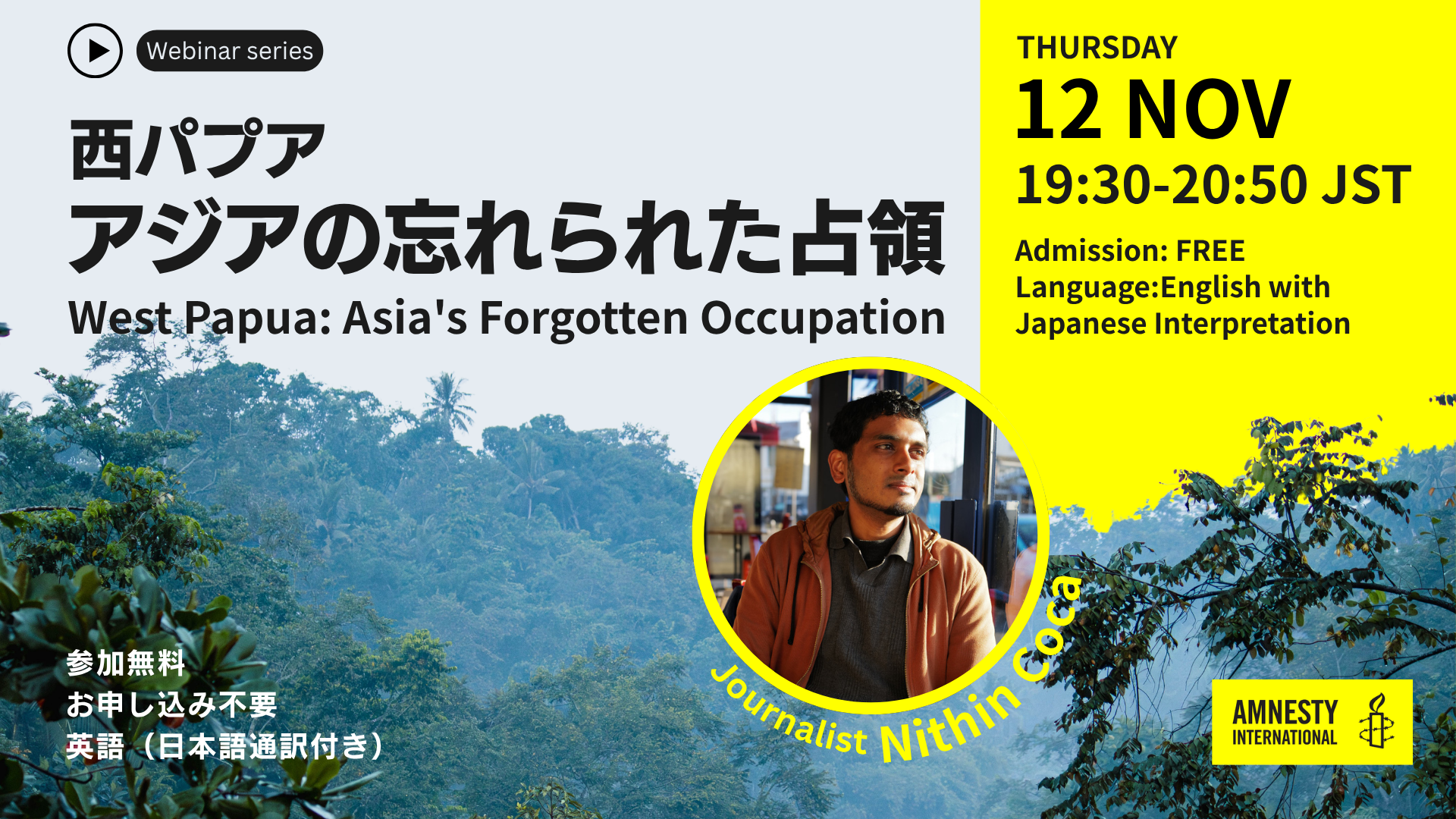
In this online seminar, journalist and researcher Nithin Coca will explore the history of West Papua, the human rights violations committed in the region, and the forces driving the current conflict. He will also discuss why the situation deserves greater international scrutiny and what it means for the protection of Indigenous peoples and human rights. *No prior knowledge required! Feel free to join late or leave early.
1949年、インドネシアがオランダから独立したとき、西パプアはインドネシアの領土ではありませんでした。独自の民族・言語を持つ先住民族が暮らすこの地域は、1969年のいわゆる「自由選択行為」によって、正式にインドネシアの支配下に入りました。でもこの投票は、選ばれたごく一部のパプア人だけが全員一致で賛成したもので、「本当の意味で民主的ではなかった」と広く批判されています。脅しや強制があったとも言われています。
それから数十年。西パプアでは、紛争・軍事化・人権侵害が続いてきました。インドネシアの治安部隊とパプア独立派の武力衝突で、一般の人びとが何度も危険にさらされてきました。一方で、インドネシア政府はジャーナリストや国際監視団、NGOが現地に入ることを厳しく制限しています。さらに、この地域は天然資源が豊富で、資源開発の拡大が大きな対立の原因になっています。
最近では、鉱山開発や資源採掘、大規模な農業プロジェクトの計画が進み、対立がさらに激しくなっています。これに対して、平和的な抗議や、パプアの武装グループによる攻撃などの抵抗が起きています。プラボウォ・スビアント大統領のもとで軍の駐留が増え、一般市民の安全や、軍事作戦が地域の人びとに与える影響への心配が一段と高まっています。
ヒューマン・ライツ・モニターによると、パプアの高地では約12万2,930人が住む場所を追われ、国内避難民になっています。その多くは女性と子どもたちで、食べ物やきれいな水、医療が十分に届いていません。トイレなどの衛生環境も劣悪です。地元団体や支援団体は、栄養失調や避難生活の厳しさに警鐘を鳴らしています。これほど深刻な危機なのに、西パプアは世界からほとんど注目されていません。
本セミナーでは、ジャーナリストのニティン・コカさんに、
・パプアの歴史
・現地で起きている人権侵害
・紛争の背景にある資源開発と軍事化
・なぜ国際社会の注目が必要なのか
についてお話しいただきます。
予備知識は一切不要、途中参加・途中退出も大歓迎です。
ぜひ、ご参加ください。
Date/日時
Thursday, 12 November 2026, 20:00~21:30/2026年11月12日(木) 20:00~21:30
Language/言語
English (Japanese interpretation available)/英語(日本語通訳あり)
Registration/お申し込み
Not required/不要
Streaming link/視聴リンク
Amnesty International Japan YouTube Channel
Organiser & Contact/主催・お問い合わせ
Amnesty International Japan
E-mail:camp@amnesty.or.jp